
R&H Hall
Cork City
Landmark Project in Sustainability
Mixed use development with planning permission for almost 1,000,000 square feet of retail and commercial space and over 1,500 homes
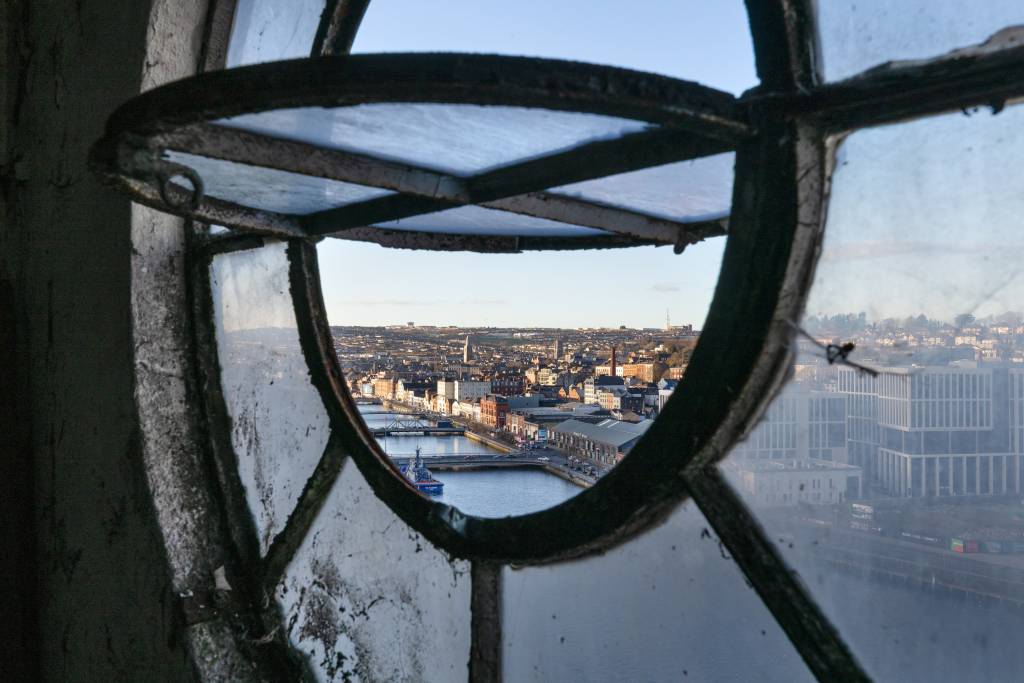
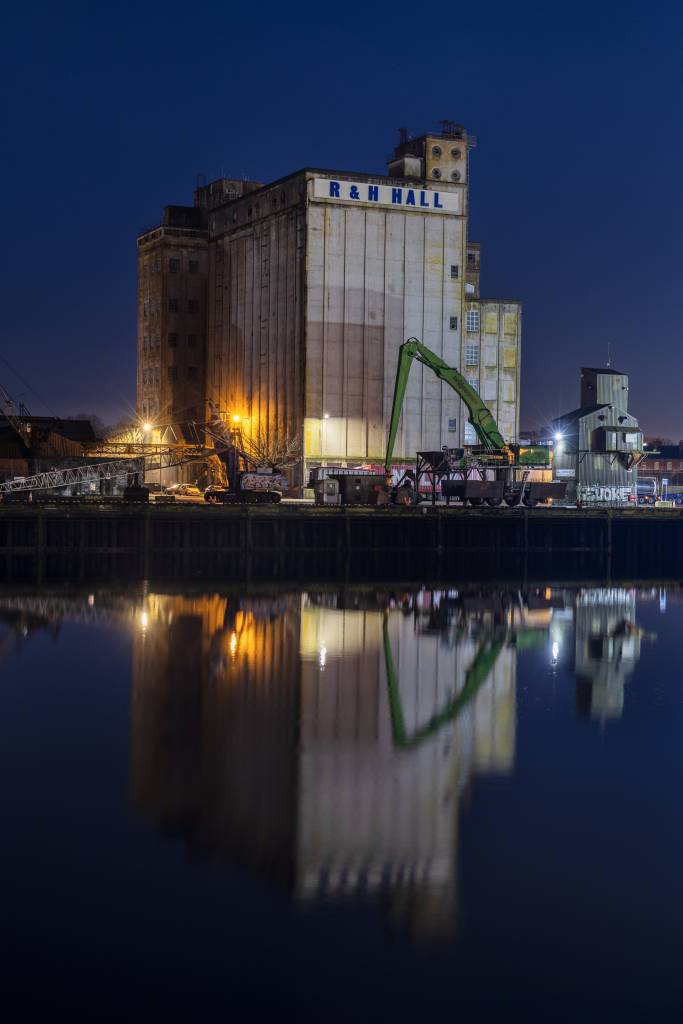
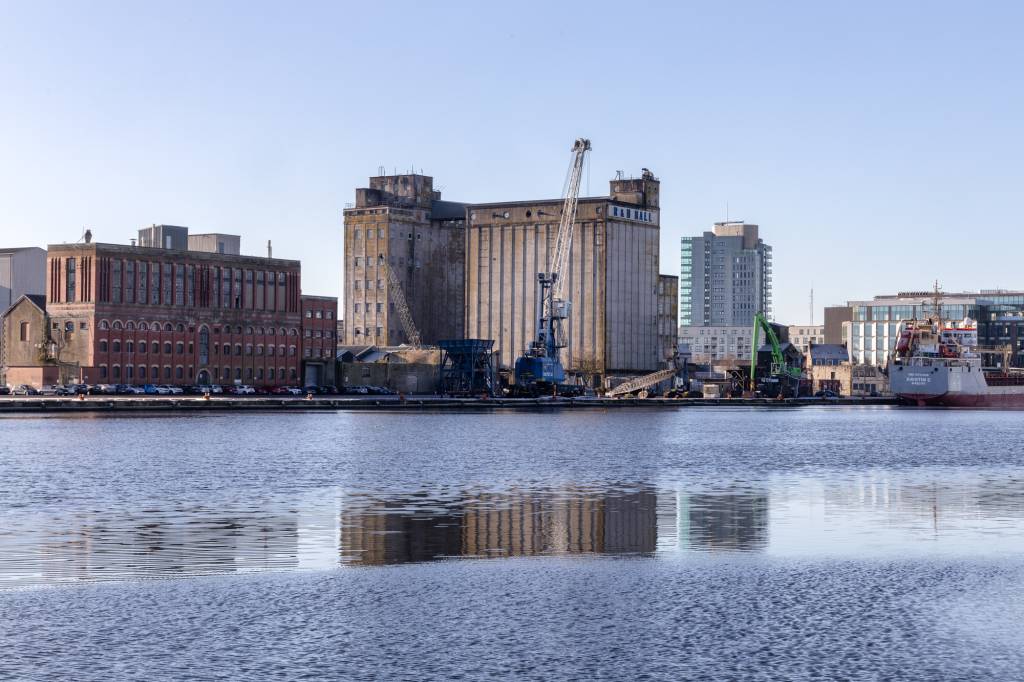
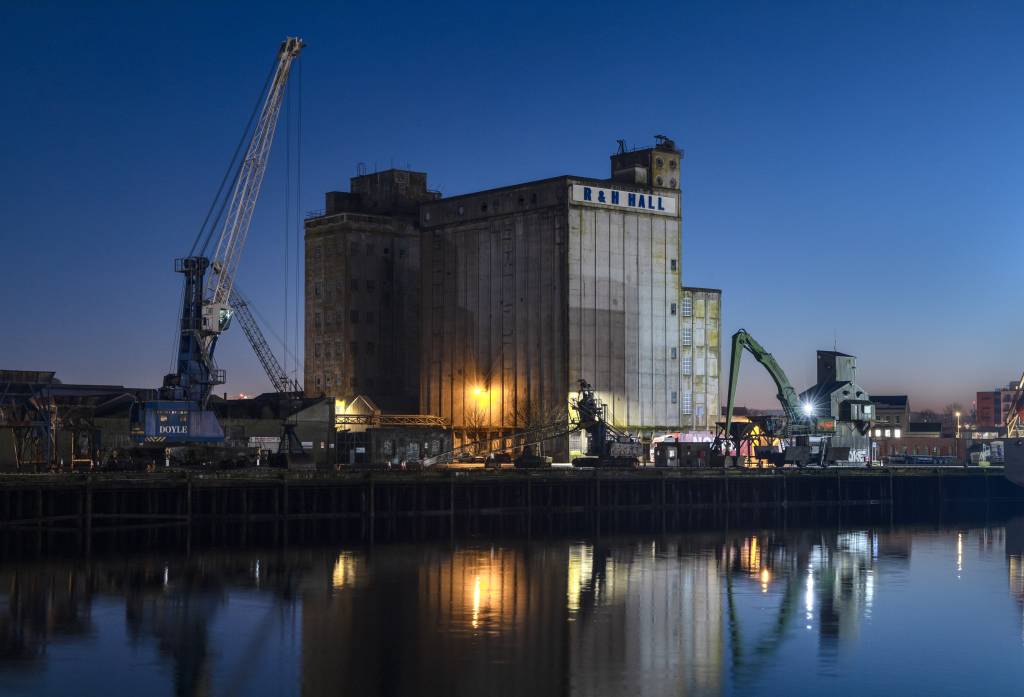
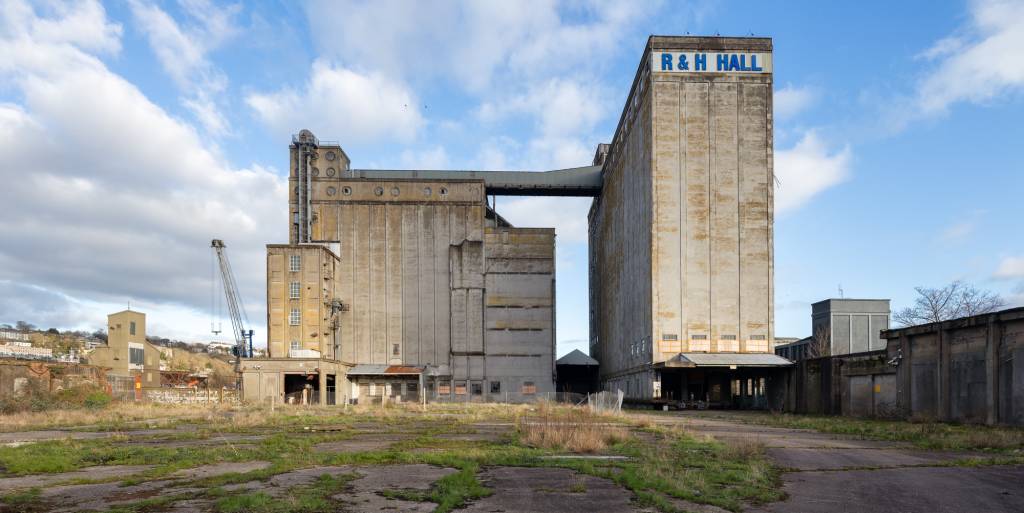
The R&H Hall demolition and recycling project represents one of the most significant early steps in the long-term regeneration of Cork South Docklands. Located on Kennedy Quay, the former grain silos formed part of Cork’s iconic skyline for nearly a century. As O’Callaghan Properties advances the transformation of the Docklands into a modern mixed-use district, this project sets a new benchmark for responsible demolition, heritage recognition, and circular-economy construction practices.
Between early 2024 and early 2025, OCP successfully demolished two large concrete silo structures and recycled an exceptional 99.70% of all materials arising from the works. This achievement reflects OCP’s sustainability commitments and its ambition to deliver redevelopment in a way that respects the past while planning responsibly for the future.
Regeneration in Cork South Docklands
The R&H Hall site sits at the eastern end of Kennedy Quay. Due to its accessibility, proximity to the Marina Market, and its location within a busy working port, the demolition required meticulous planning, phased execution, and a robust approach to public safety.
Challenges
The project team faced several operational, structural, and environmental challenges:
An Active Port Environment
Continuous port traffic, cargo handling, and public access through the Marina Market meant demolition works had to fit seamlessly within an active urban port setting. Over ten thousand people visited the area weekly, requiring enhanced safety protocols and traffic management.
Heritage & Archaeology
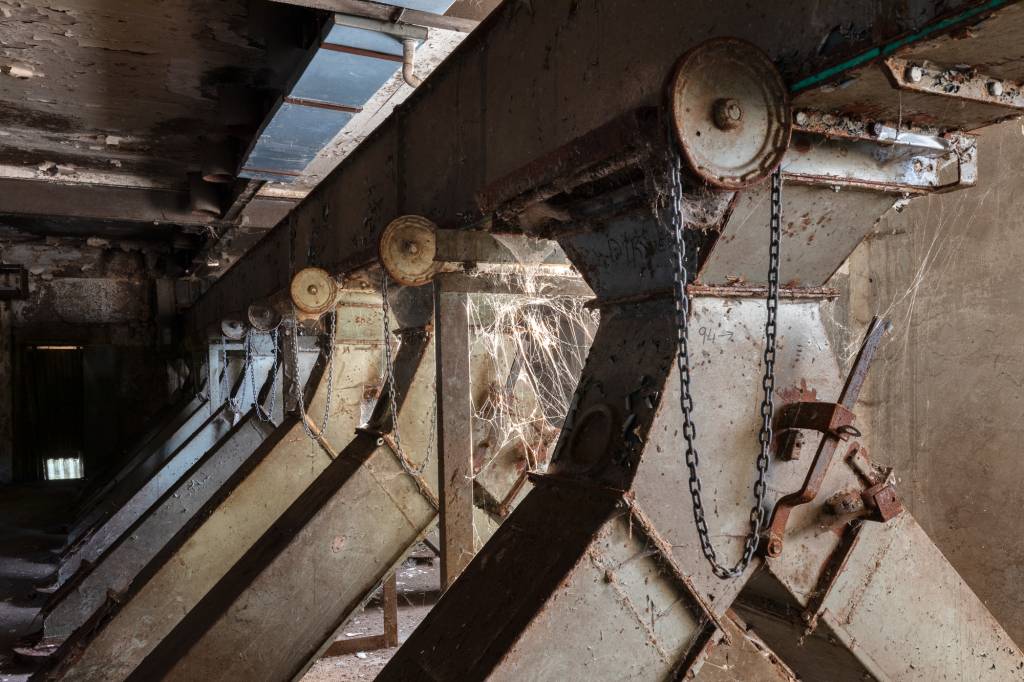
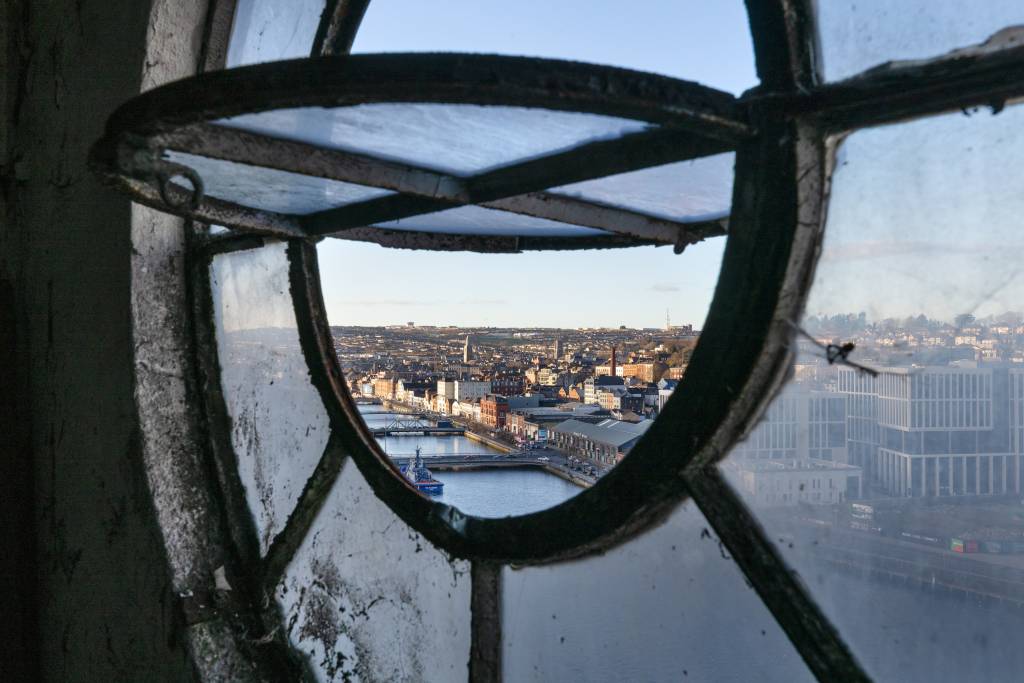
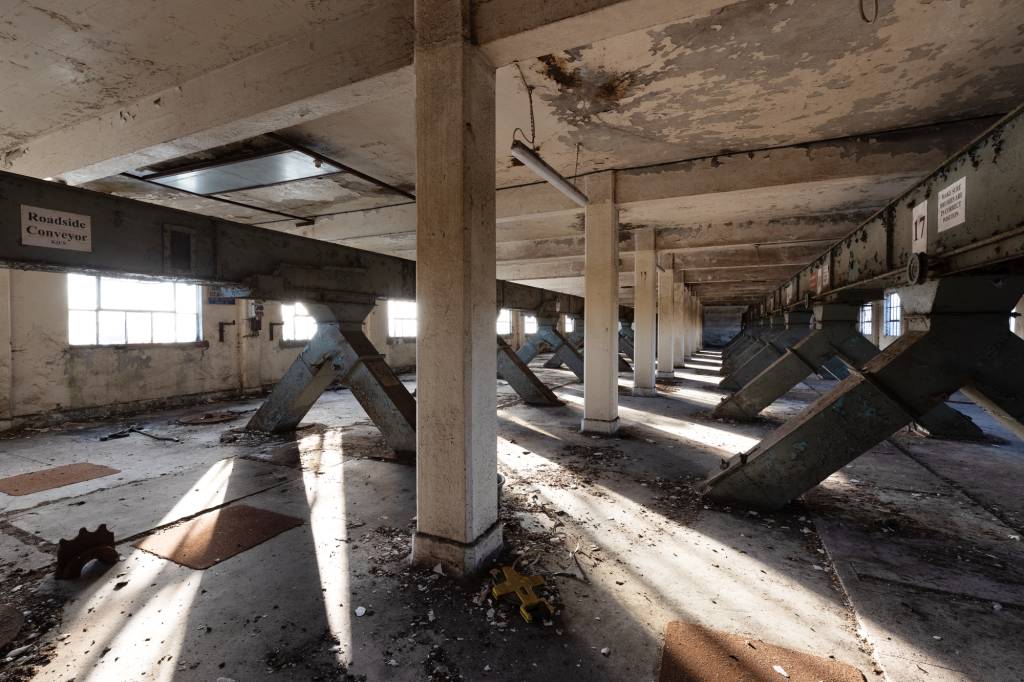
Prior to demolition, OCP commissioned a comprehensive programme of industrial archaeology led by University College Cork. This included documenting milling machinery, recording the structure’s construction methods, and identifying elements suitable for restoration or reuse.
Structural Complexity
The grain silos, heavy reinforced-concrete structures constructed in the 1930s, required detailed core testing, structural modelling, and a carefully sequenced demolition plan.
Environmental & Compliance
The project adhered to: - Article 28 demolition principles - EPA guidelines and waste-management regulations - Strict segregation and tracking of materials - ISO-accredited environmental auditing
Sustainability in Action
O’Callaghan Properties approached the R&H Hall demolition with a clear commitment to circular-economy principles, heritage preservation, and responsible site management. The result is a benchmark project that demonstrates what sustainable demolition can achieve at scale.
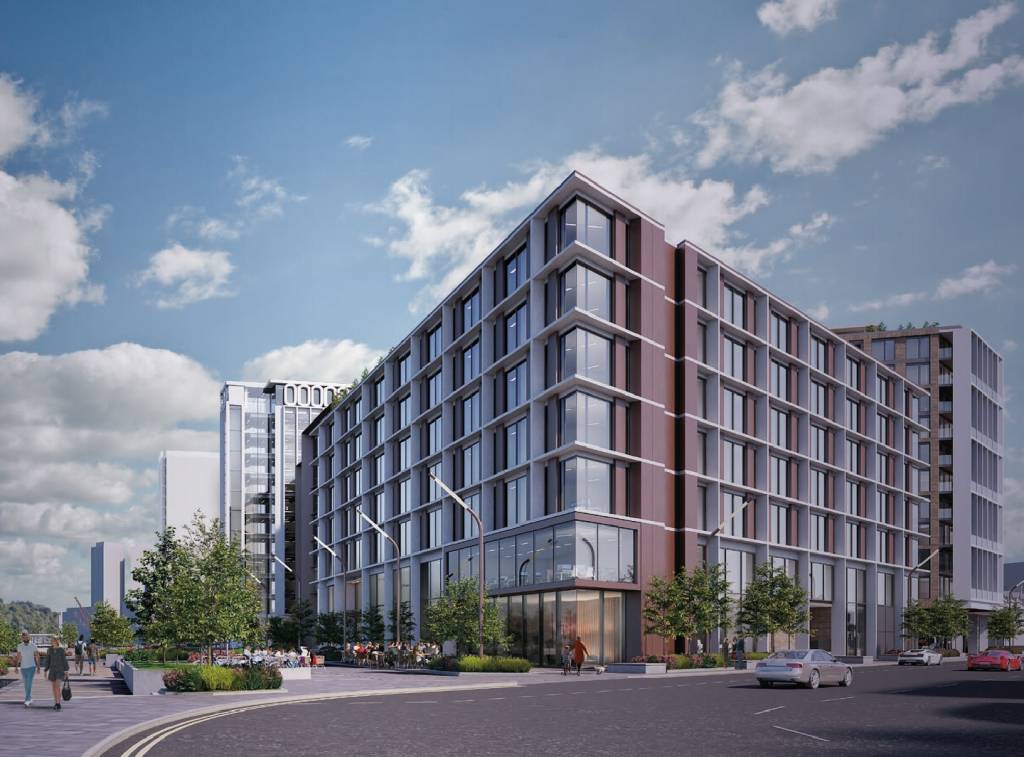
Major structural and deterioration issues sadly made a viable re-purposing of the 90 year old silo buildings impossible to achieve. The R&H Hall buildings will be replaced by a new sustainable landmark building that occupies the same footprint, making reference in its design to the industrial characteristics of the silos. The architectural design of the new buildings clearly reflects and mirrors the silos.
Almost all of the demolition material from the R&H Hall silos on Kennedy Quay is being re-used, in one of the most significant construction recycling projects undertaken in Cork to date.
Some 16,000 tonnes of mass concrete material arising from the demolition of the silos will be used in an upgrade of the Midleton to Cork railway line, thereby providing a double sustainability gain in that the material has been converted to a resource to be used in a public transport project. It is estimated that the re-use of the crushed concrete will potentially save circa 180,000 kg/co2. The amount of CO2e emissions saved is roughly equivalent to the emissions generated by the annual average driving of 55 people in Ireland, the electricity consumption of around 250 dwellings a year or the emissions of approximately 85 long-haul flights.
A central goal of the project was to maximise resource recovery, with the demolition achieving a recycling rate of 99.70 percent through detailed material segregation and on-site processing. Concrete, steel, timber, and equipment were separated, crushed, and prepared for reuse in compliance with EPA guidelines, significantly reducing the need for virgin materials and lowering the environmental impact of the works.
Before demolition began, OCP undertook extensive salvage works to retain valuable elements of the historic milling structures. Key machinery and components were removed, preserved, and stored for potential reuse or display within future phases of the Docklands regeneration, ensuring that the site’s industrial heritage remains part of its evolving identity.
Working with University College Cork, the project team completed a full industrial-archaeology programme, photographing and cataloguing the buildings, machinery, and internal structures. This meticulous documentation captures the historical and technical significance of the R and H Hall silos and provides an important archive for future reference as the wider Docklands redevelopment progresses.
All crushed concrete was reclassified as 6F2 aggregate and is now being reused in the Midleton Commuter Rail Improvement Project. This circular-economy approach avoided the need for landfill disposal and reduced the demand for quarried aggregate, resulting in substantial embodied-carbon savings and contributing directly to a key sustainable transport upgrade for the region.
Given the site’s proximity to the Marina Market and its location within an active port, the project required continuous environmental monitoring. Noise, dust, and vibration were managed through controlled demolition sequencing, dust suppression systems, curtain screening, and strict on-site controls, ensuring that works were carried out safely and with minimal disruption to neighbouring businesses and the public.
Honouring the Past, Preparing for the Future
Although demolition was necessary to enable the next phase of development, OCP was committed to commemorating the site’s heritage. Elements of the former machinery and structural components have been retained for potential integration into future public-realm features within the Docklands.
This balanced approach, conserving where feasible, documenting where necessary, and repurposing wherever possible, ensures the history of the R and H Hall site contributes meaningfully to the story of Cork’s future waterfront.